

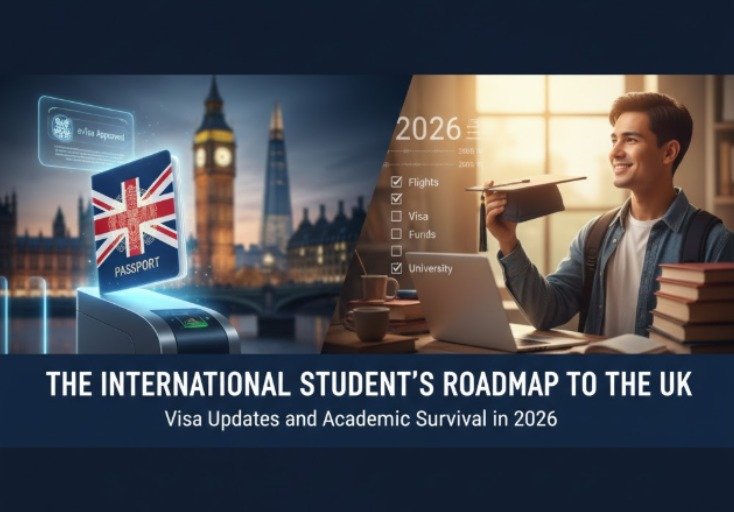
Stepping off a plane at Heathrow, Manchester, or Edinburgh is a dream for thousands of ambitious students every year. The United Kingdom remains a top-tier destination because of its rich history, vibrant culture, and world-renowned universities. However, the landscape for international students has changed significantly as we move through 2026. From the full transition to digital visa systems to stricter financial requirements, staying informed is no longer just “good advice”—it is the absolute key to your academic survival.
The year 2026 marks a turning point in how the UK manages its international student community. While the country is as welcoming as ever, the administrative hurdles have become more precise. This guide is designed to help you navigate these shifts, manage your finances effectively, and master the unique British style of learning that often catches newcomers off guard.
Navigating the New Digital Frontier: Visa Updates 2026
The most significant shift this year is the final and total transition to the Digital eVisa. For those arriving in 2026, the era of the physical Biometric Residence Permit (BRP) plastic card is over. Your immigration status is now entirely linked to your passport via a secure UKVI digital account. While this makes traveling through e-gates much faster, it places a higher responsibility on you. You must ensure your digital profile is updated every time you renew your passport or change your contact details.
Beyond the digital shift, the UK government has introduced a “Quality Over Quantity” approach to student intake. This means universities are under more pressure than ever to ensure their students are genuinely succeeding and progressing. If you find the transition from creative writing to formal research difficult, exploring various informal essay topics can be a fantastic way to practice your narrative flow and voice before you dive into heavy academic dissertations. Building this “writing muscle” early prevents the kind of academic lag that can flag your visa status for poor progression.
Higher Financial Requirements for 2026
One of the biggest hurdles for the 2026 intake is the updated financial maintenance requirement. The Home Office has significantly increased the amount of money students must show to account for the rising cost of living in UK cities. This isn’t just a suggestion; it is a strict legal requirement that must be met before your Confirmation of Acceptance for Studies (CAS) is even processed.
| Location Category | Monthly Fund Requirement (2026) | Total for 9 Months (Standard Requirement) |
| Inside London | £1,483 | £13,347 |
| Outside London | £1,136 | £10,224 |
Crucial Note: These funds, along with any unpaid tuition fees, must be held in your bank account for a minimum of 28 consecutive days before you submit your application. Even a single day where the balance dips below the required amount will result in an automatic visa refusal.
Understanding the British Academic Culture
The UK university system is built on the philosophy of Independent Learning. In many parts of the world, undergraduate education involves a “spoon-feeding” approach where students memorize lectures and repeat them in exams. In Britain, your tutors expect you to be an active participant in your education. You aren’t just there to listen; you are there to challenge, analyze, and synthesize.
This shift often causes “Academic Culture Shock.” You might find that you only have 12 to 15 hours of “contact time” per week. The rest of your 40-hour work week is expected to be spent in the library, engaging with reading lists that are often dozens of pages long. If you don’t manage your time from week one, the workload during “dead week” (the period before exams or major submissions) can become unmanageable.
Managing the Deadline Pressure
As you settle into your first year, you will realize that assignments in the UK are weighted heavily. A single 3,000-word essay might account for 60% or even 100% of your total grade for a module. This puts an enormous amount of pressure on your ability to conduct high-level research and adhere to strict UK referencing standards like Harvard or OSCOLA.
When the pressure of these high-stakes assignments starts to affect your mental health or your ability to meet the grades required to stay on your course, seeking professional essay help can be a smart, strategic move. It allows you to see model examples of British academic structure and critical analysis, which are often very different from what undergraduate students are used to in their home countries. Think of it as a tutoring resource that helps you understand the “standard” expected by UK markers.
The Social Side: Freshers, Societies, and Beyond
Your survival in the UK depends just as much on your social life as it does on your grades. Homesickness is a real challenge, particularly during the dark, rainy winter months of November and February. The best way to combat this is through the “Societies” system. Every UK university has hundreds of student-run clubs, ranging from serious career-based groups like the Law Society to niche interests like the “Hummus Appreciation Society.”
Participating in these groups is where you will build your “mini-family.” These friends will be the ones who help you navigate the quirks of British life—like learning that “Are you alright?” is a greeting, not a genuine question about your health, or discovering the importance of a “Sunday Roast.”
Part-Time Work Rights and Realities
Most international students on a Student Visa are permitted to work up to 20 hours per week during term time and full-time during holidays. However, a common mistake is relying on this income to pay for tuition. In 2026, the job market for students is competitive, and the cost of living is high. Your part-time job should be for “extra” spending money or small bills—not your primary survival fund.
Always check your eVisa status to confirm your specific work rights. Working more than your permitted hours is a breach of visa conditions and can lead to immediate deportation.
Mastering the Art of Critical Thinking
To rank high in your classes, you must master “Critical Thinking.” This means going beyond just describing what an author said. You must ask: Why did they say it? What evidence is missing? How does this compare to other theories? UK professors don’t give the highest marks to students who agree with everything in the textbook; they give them to students who can construct a logical, evidence-based argument that shows original thought.
The Graduate Route: Thinking Long-Term
The “Graduate Visa” (Post-Study Work) remains a major draw for students in 2026. This allows you to stay and work in the UK for two years (three for PhD students) after finishing your degree. To qualify, you must successfully complete your course. This brings us back to academic survival—your long-term career goals in the UK are entirely dependent on your short-term academic performance.
5 Pro-Tips for UK Student Survival in 2026
- Register with a GP Early: Don’t wait until you’re sick. Register with a local doctor as soon as you have your UK address.
- Get a Railcard: A “16-25 Railcard” (also available to mature students) will save you 1/3 on all train travel across the UK. It pays for itself in just one or two long trips.
- Learn to Cook: Eating out in the UK is expensive. Learning to meal prep will save you hundreds of pounds a month.
- Embrace the Library: The university library isn’t just for books; it’s a hub for workshops on academic writing, referencing, and IT skills. Use them!
- Check Your Emails: UK universities communicate almost exclusively through your student email account. If you miss an email about a visa check or a deadline, “I didn’t see it” is not an accepted excuse.
Conclusion
The journey of an international student in the UK is a marathon, not a sprint. The 2026 landscape requires you to be more digitally savvy and financially prepared than previous generations, but the rewards remain just as great. By staying on top of your visa requirements and proactively seeking support when your academic workload gets heavy, you can ensure that your time in the UK is more than just a struggle for “survival”—it becomes the most transformative experience of your life.
About The Author
I am Ruby Walker, a student-focused academic writer and blogger at MyAssignmentHelp. My mission is to empower learners by simplifying complex academic concepts into actionable, easy-to-follow advice. With a deep interest in student productivity and writing excellence, I specialize in creating guides that help undergraduates navigate everything from essay structures to ethical research. I believe that with the right tools and guidance, every student can find their authentic voice and achieve their academic goals with confidence.”



















Leave a Reply