

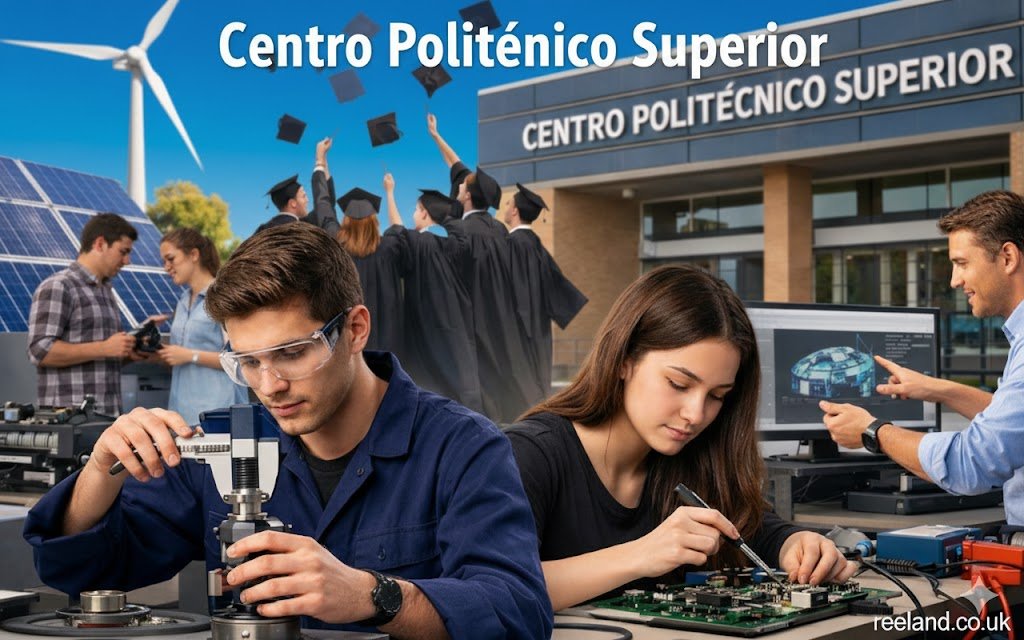
The Centro Politécnico Superior (CPS), once a pivotal institution in Zaragoza, Spain, continues to influence the landscape of engineering and architecture education. Though it is no longer an independent entity following a structural change, the legacy of CPS lives on through the Escuela de Ingeniería y Arquitectura (EINA), which now houses the core engineering and architecture programs at the University of Zaragoza. This article explores the history, significance, and lasting impact of CPS on the region’s educational and industrial sectors, as well as its role in shaping modern technical education.
1. Background: The University of Zaragoza
The University of Zaragoza (Universidad de Zaragoza) is one of the oldest and most prestigious universities in Spain, founded in 1542. With a rich tradition of academic excellence, the university has long been a leader in research, education, and community development. It is a public institution located in the city of Zaragoza, the capital of the Aragon region, with multiple campuses spread across the country.
The Centro Politécnico Superior was an integral part of the University of Zaragoza, dedicated to offering top-tier technical education. While it no longer functions as an independent school, its transformation into the Escuela de Ingeniería y Arquitectura (EINA) represents the university’s commitment to adapting to modern educational demands while continuing its legacy of excellence in engineering and applied sciences.
2. What Was Centro Politécnico Superior?
Centro Politécnico Superior (CPS), historically part of the University of Zaragoza, was founded to meet the growing demand for highly skilled engineers and architects in Spain. CPS specialized in offering technical education in various engineering disciplines, including:
- Mechanical Engineering
- Industrial Engineering
- Telecommunications Engineering
- Civil Engineering
- Chemical Engineering
- Computer Engineering
The focus of CPS was to provide a comprehensive education that combined theoretical knowledge with practical application, preparing students for the challenges of the professional world. The institution quickly earned a reputation for producing highly competent engineers who went on to work in industry, academia, and government positions.
Academic Programs at CPS
CPS offered a range of academic programs, from undergraduate degrees to doctoral studies, designed to equip students with the necessary skills to succeed in the rapidly evolving technological and industrial landscape.
The programs focused on providing a solid foundation in core subjects such as:
- Mathematics
- Physics
- Chemistry
- Mechanics
- Computer Science
In addition to theoretical instruction, students at CPS were exposed to hands-on learning through laboratories, practical exercises, and internship opportunities with local industries.
3. The Transformation of Centro Politécnico Superior into EINA
In 2011, CPS underwent a significant restructuring as part of a broader reorganization at the University of Zaragoza. This transformation resulted in the formation of the Escuela de Ingeniería y Arquitectura (EINA), which absorbed CPS and other related departments, merging them into a unified institution that would continue the university’s strong tradition in engineering and architecture education.
The creation of EINA allowed the university to consolidate its engineering and architecture programs, expand its curriculum, and enhance interdisciplinary collaboration. Today, EINA is one of the leading schools in Spain, offering Bachelor’s, Master’s, and Doctoral programs in a wide range of engineering disciplines, including mechanical, industrial, civil, and telecommunications engineering, as well as architecture.
Key Features of EINA
- Diverse Academic Programs: EINA offers undergraduate degrees (Grado), Master’s degrees (Máster Universitario), and Doctoral programs (Doctorado) in engineering, architecture, and related fields.
- Research Excellence: EINA maintains a strong focus on research and innovation, with ongoing projects in areas such as renewable energy, robotics, smart cities, and artificial intelligence.
- Industry Collaboration: EINA collaborates closely with local industries and businesses, providing students with opportunities for internships, research projects, and job placements after graduation.
- International Partnerships: EINA has established global partnerships with other universities and research institutions, fostering a global learning environment and student exchange programs.
While CPS is no longer a standalone entity, its legacy is carried forward by EINA, ensuring that the technical education programs originally offered by CPS continue to evolve and expand in response to the needs of modern industries.
4. The Role of Economics and Business Administration at Centro Politécnico Superior and EINA
In addition to technical education, CPS and its successor EINA also recognized the importance of business and economics in the training of future engineers. This was reflected in the integration of economic and management principles into the academic programs.
Department of Economics and Business Administration
The Departamento de Economía y Dirección de Empresas (Department of Economics and Business Administration) at the University of Zaragoza is an essential component of the engineering and architecture programs at EINA. This department focuses on providing students with the managerial and economic knowledge required to navigate the business aspects of engineering projects.
Students from EINA are exposed to subjects such as:
- Business Management
- Financial Accounting
- Marketing and Strategy
- Project Management
- Innovation and Entrepreneurship
The integration of economic and business courses ensures that students are not only skilled in their technical fields but are also prepared to lead projects, manage teams, and make informed business decisions in their professional careers.
5. Doctoral Studies and Research Opportunities at EINA
EINA, the successor to CPS, continues to offer doctoral programs that build on the academic foundation provided at the undergraduate and Master’s levels. The doctoral programs at EINA are designed to prepare students for cutting-edge research in areas such as engineering, technology, architecture, and business management.
Doctoral Programs
- Ph.D. in Engineering: The Ph.D. program at EINA allows students to conduct research in areas such as mechanical engineering, industrial engineering, telecommunications, and robotics. Students are expected to contribute original research that addresses real-world challenges in their respective fields.
- Ph.D. in Architecture: EINA also offers doctoral research in architecture, focusing on topics such as sustainable building design, urban planning, and construction technologies.
- Collaborative Research: EINA promotes collaborative research with industry partners, research centers, and other academic institutions, allowing students to engage in projects with real-world applications.
Doctoral students at EINA often have access to state-of-the-art research facilities and international collaboration opportunities, preparing them to become leaders in their fields.
6. EINA’s Contributions to Industry and Technology
EINA continues the legacy of CPS by contributing to Spain’s industrial development and technological innovation. The school has developed close ties with local industries in Zaragoza and across Spain, providing students with access to internships, research projects, and industry-sponsored initiatives.
Some of the areas where EINA’s research has made a significant impact include:
- Renewable Energy: Research in solar energy, wind energy, and sustainable technologies.
- Smart Cities: Development of technologies for urban mobility, smart grids, and sustainable infrastructure.
- Artificial Intelligence: Cutting-edge research in AI applications for robotics, automation, and data analytics.
EINA’s collaboration with industries helps ensure that students receive relevant, practical training that meets the needs of modern industries.
7. The Legacy of Centro Politécnico Superior and EINA’s Future
While @Centro Politécnico Superior no longer operates as a standalone entity, its legacy continues through Escuela de Ingeniería y Arquitectura and its impact on engineering education in Zaragoza. The transformation of CPS into EINA has allowed the university to expand its offerings, integrate new research disciplines, and adapt to the demands of a rapidly changing world.
Looking Ahead
EINA’s focus on interdisciplinary research, global collaboration, and industry engagement ensures that it will continue to be a leader in engineering and architecture education. As technology evolves, EINA will likely expand its programs in emerging fields such as artificial intelligence, sustainable engineering, and cybersecurity.
Students who graduate from EINA continue to make significant contributions to industries in Spain and worldwide, taking with them the knowledge and skills they gained at an institution with a proud history of technical education and innovation.
Conclusion
The Centro Politécnico Superior played a pivotal role in the development of engineering education in Zaragoza and Spain. Although it no longer exists as an independent entity, the legacy of CPS continues through the Escuela de Ingeniería y Arquitectura (EINA), which carries forward its commitment to academic excellence, research, and technological advancement. CPS and EINA have shaped the careers of countless engineers and architects, leaving an enduring legacy that contributes to the ongoing growth of industry, research, and education in Spain.















Leave a Reply