

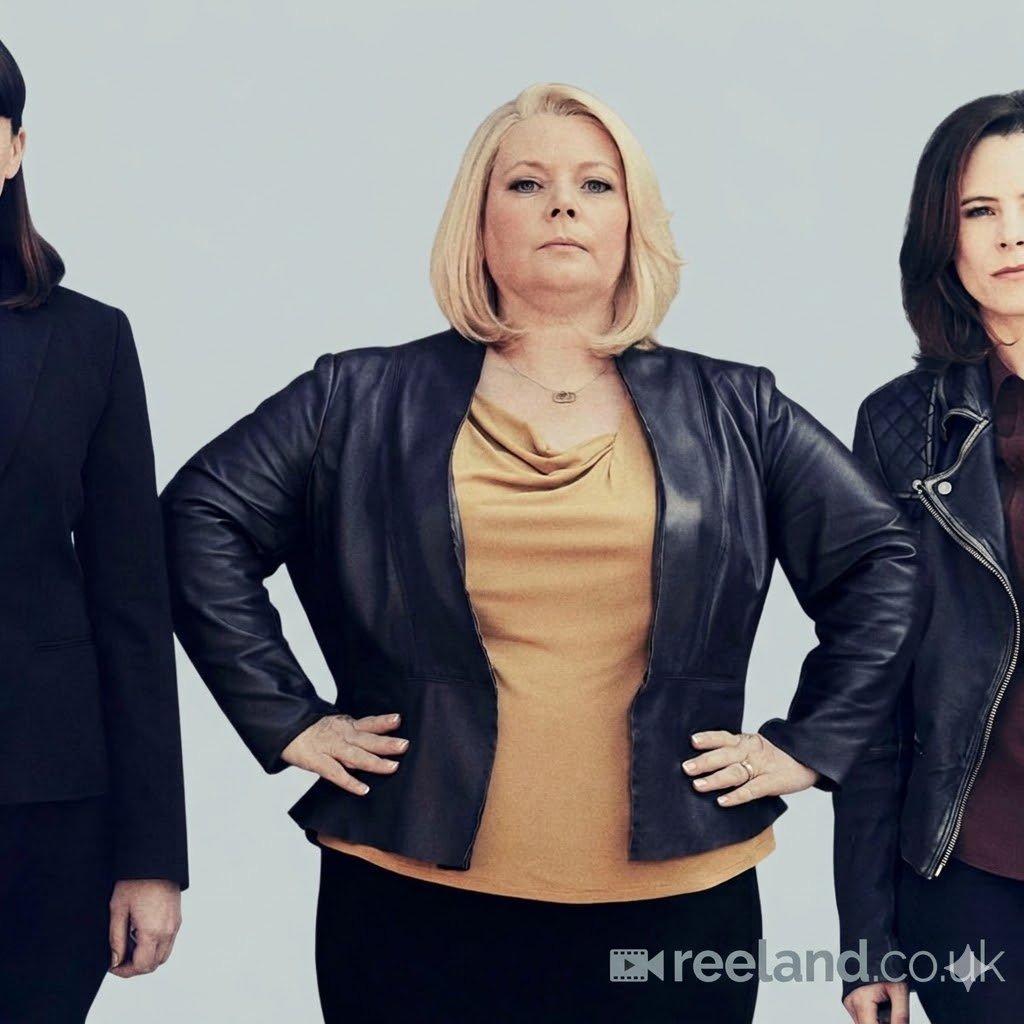
Joanna Scanlan is a British actress and writer known for doing something that’s deceptively hard: making characters feel real even when the world around them is exaggerated, satirical, or painfully absurd. People search her name because she is one of those performers you recognize instantly—then immediately want to look up to confirm where you’ve seen her before. Her work spans sharp political comedy, dark workplace satire, mainstream television drama, and award-winning independent film, which means she’s constantly being rediscovered by different audiences at different moments.
A major driver of modern interest is her acclaimed lead performance in the film After Love, which shifted her profile from “brilliant character actress you always notice” to “leading actor who can carry a film with quiet force.” At the same time, long-running fandom around The Thick of It and Getting On keeps her name circulating year after year, because both shows remain culturally alive through clips, rewatches, and word-of-mouth recommendations. Her career also has an unusual shape: she committed fully to acting later than many screen actors, and the combination of maturity, intelligence, and restraint in her performances has become her signature.
Joanna Scanlan Biography: Early Life, Education, and the Welsh Connection
Joanna Marion Scanlan was born on 27 October 1961 in West Kirby, Cheshire, England, and she moved to North Wales as a child. That North Wales background matters in small but meaningful ways because it gives her story a regional texture that sits slightly apart from the standard London-centric narrative. She studied history at Queens’ College, Cambridge, and joined the Cambridge Footlights, a famed comedy and performance society that many UK screen and stage figures passed through. The Footlights detail tends to stand out in biographies because it signals an early connection to performance culture, even though Scanlan’s most prominent work arrived later.
Her Welsh connection also reappears through her interest in Welsh language and Welsh culture, which has occasionally been noted in public profiles. For many fans, this thread helps explain why she feels rooted and grounded on screen—she doesn’t play characters as generic “types,” but as people shaped by place, class, work, and habit.
A Late Pivot Into Acting That Became a Strength
One of the most defining parts of Joanna Scanlan’s story is that she did not build her career through the most common early-acting pipeline. After university, she worked in roles connected to the arts and education, including teaching and arts administration, before committing fully to acting in her mid-30s. This “later” start is often described as a pivot, but it’s better understood as an advantage. She arrived on screen with lived experience—professional environments, institutional language, adult fatigue, and the social texture of real workplaces. Those things are hard to imitate convincingly if you haven’t been around them.
This background shapes the kind of characters she plays. Scanlan is exceptionally good at capturing the social behavior of real people—how they avoid blame, how they defend status, how they cope under pressure, how they pretend competence, how they hide vulnerability. That realism is part of why she fits so perfectly in satire: satire gets sharper when it feels plausible.
The Thick of It: Terri Coverley and the Comedy of Bureaucracy
For many viewers, the first time Joanna Scanlan became unforgettable was The Thick of It, the iconic British political satire. She played Terri Coverley, a senior press officer whose apparent incompetence is so persistent it becomes a kind of institutional joke. Terri is not simply a “bad worker” caricature; she is a portrait of how systems sometimes protect the least effective people while punishing those who actually try. That is what makes the character enduringly funny and also faintly horrifying.
Scanlan’s performance works because she never signals “I’m here to be funny.” Instead, she plays Terri with full belief in Terri’s own self-image. Terri is convinced she’s doing fine, convinced she’s misunderstood, convinced she’s unfairly criticized, and Scanlan performs that internal logic with painful accuracy. In a show built around power, language, and manipulation, Terri becomes a different kind of satire: she reveals what happens when a system produces nonsense and then refuses to admit it.
The Thick of It continues to generate searches for Scanlan because it remains a reference point for political comedy and modern British television. People discover it years later, watch it in a binge, and then Google the cast. Terri Coverley is a character you remember even if you can’t immediately recall the actor’s name, so Joanna Scanlan becomes the answer to that recognition moment.
Getting On: Actress, Co-Creator, and Writer
If The Thick of It made Joanna Scanlan visible, Getting On made her essential. Getting On is a satirical sitcom set on a geriatric ward in an NHS hospital, and it is known for mixing bleak realism, systemic critique, and compassion. Scanlan wasn’t only a lead actor in the show; she was also a co-creator and writer, which shaped the tone and the emotional intelligence that made the series stand out.
She played Denise “Den” Flixter, the ward sister—an exhausted, competent, overwhelmed woman trapped between the reality of nursing care and the bureaucratic language of management. Den is constantly managing impossible expectations: staff shortages, emotional labor, patient needs, and administrative nonsense. The comedy comes from truth, not from punchlines. It’s the humor that escapes when pressure becomes ridiculous and everyone is still expected to smile.
What made Getting On extraordinary is that it didn’t treat healthcare workers as heroes or villains. It treated them as human beings—frustrated, funny, compassionate, petty, tired, tender, and occasionally wrong. Scanlan’s writing and performance helped build that complexity. It’s one reason her name is searched not only as an actress but also as a writer. People who love Getting On often want to know who shaped it, and Scanlan is part of that answer.
Why Getting On Still Feels Modern
Some shows age quickly because they rely on topical jokes or a narrow cultural moment. Getting On ages well because its core subject—institutions under strain—does not go away. The NHS ward setting is specific, but the emotional reality is universal: the feeling of being asked to do more with less, to hit targets without resources, to absorb human pain while staying functional.
Scanlan’s characters often exist in that kind of environment, which is why her work resonates even when the scripts are comedic. Her performances carry the weight of systems and the cost of coping. That’s why viewers rediscover her through Getting On and then follow her career into drama.
The HBO Adaptation and International Reach
Getting On was adapted into an American version for HBO, and the fact that the original show’s voice traveled internationally reinforces Scanlan’s creative significance. It wasn’t merely a successful sitcom; it was a format and a perspective strong enough to cross cultures. For audiences, this contributes to the idea of Scanlan as more than an actor who appears in things. She is someone who helps make things—someone whose taste and sensibility shape the final work.
This kind of authorship matters for SEO and for public perception. When someone is both writer and performer, audiences look them up differently. They search not only “what was she in,” but “what did she create,” “what did she write,” and “what else has the same tone.” That is part of Scanlan’s long-term relevance.
No Offence: A Detective Lead With Human Authority
Joanna Scanlan also became a lead for a different audience through No Offence, a British crime drama where she played Detective Inspector Viv Deering. Crime shows often rely on familiar archetypes: the hard-bitten boss, the damaged genius, the rule-breaker, the stoic survivor. Scanlan’s version of authority is different. She doesn’t play toughness as a costume. She plays it as competence, pressure, and responsibility.
Viv Deering is memorable because she feels like a person who has done the job for years and learned what it costs. Scanlan’s performance carries a sense of leadership that is practical rather than glamorous. She doesn’t need to dominate every scene to feel central. Instead, she anchors the ensemble with credibility. That credibility is one of her strongest qualities across genres. Even when she plays someone chaotic, you believe the chaos comes from a real psyche, not from a writer’s trick.
No Offence expanded her audience beyond comedy fans and brought in viewers who primarily watch mainstream drama. That contributes to her search footprint because people meet her through different routes and then converge on the same question: who is she and what else has she done?
Film Work and the “I’ve Seen Her Everywhere” Effect
Joanna Scanlan’s filmography includes a long list of supporting roles in significant films, and this creates a powerful search behavior pattern. People watch a film, recognize Scanlan, and then search her name to connect the dots. The effect compounds over time because she has appeared in many well-known titles across decades. She is one of those actors who turns up in prestige drama, literary adaptations, popular comedies, and political satire, often leaving a strong impression in a relatively small amount of screen time.
This “I’ve seen her everywhere” effect is a major driver of evergreen search traffic. Scanlan isn’t a single-role star; she is a consistent presence. That consistency keeps her name in circulation because new audiences are constantly encountering her for the first time.
After Love: The Performance That Changed the Conversation
After Love is the film most closely tied to Joanna Scanlan’s modern critical reputation. In it, she plays Mary Hussain, a widow living in Dover who discovers after her husband’s death that he had a secret life across the Channel in France. The story unfolds through grief, shock, identity, and the quiet decisions people make when the ground beneath them changes.
Scanlan’s performance is often described through words like restrained, precise, and devastating—not because it is flashy, but because it is truthful. She plays a character who is trying to keep herself together while the meaning of her life rearranges itself. The film doesn’t rely on melodrama; it relies on observation. Scanlan is exceptionally good at observational acting—micro-expressions, pauses, the way someone stands when they’re alone, the way their voice changes when they try to sound normal.
This kind of acting is harder than it looks. It requires confidence and craft because you’re not protected by big speeches or dramatic gestures. You have to trust the audience to feel what the character cannot say. Scanlan does that, and After Love is the clearest example of her ability to carry a film.
What Her Awards Recognition Signaled
Awards attention around After Love did more than celebrate a single performance. It signaled a shift in how the industry and the public categorize Joanna Scanlan. For many years, she was widely admired as a character actor—someone who elevates everything she’s in. After Love put her in the center. It made the argument that she is not only a supporting asset but a leading force.
When that shift happens, search behavior changes. People don’t only look up her filmography; they look up her interviews, her background, her other lead roles, and her creative work as a writer. Her name becomes a “gateway keyword” rather than a “cast confirmation keyword.” That’s exactly what happened after the film: viewers began exploring her whole career rather than treating her as a familiar face.
Joanna Scanlan Acting Style: Why She’s So Trusted
Joanna Scanlan has a rare ability to combine intelligence with warmth and edge. She can play institutional authority and personal fragility in the same scene. She can do comedy without turning characters into cartoons, and she can do drama without turning emotion into performance. Her work tends to be character-first rather than ego-first. She doesn’t “announce” her talent; she disappears into people.
A defining feature of her performances is how well she understands systems. Whether she’s playing a nurse, a press officer, a detective, or a grieving widow, she understands how the system around the character shapes the character’s behavior. That makes her roles feel real because real people are always negotiating systems—workplace hierarchy, family expectations, social class, institutional language, and unspoken rules.
Directors value actors who can deliver that kind of realism without slowing down the story. Scanlan can do it quickly. She can create the sense of a full human history inside a short scene. That’s one reason she keeps being cast across genres: she gives depth without demanding attention.
Recent Work and Continued Relevance
Joanna Scanlan remains searchable because she continues working in new projects across different formats, including television and audio work. That matters because careers can become “nostalgia-based” if the most famous roles are decades old. Scanlan’s career is not nostalgia-based; it is active. New roles bring in new audiences, and new audiences trigger new searches.
The modern media environment also helps. Streaming and on-demand viewing means old shows become new again. Someone can discover The Thick of It or Getting On for the first time in 2026, then immediately jump to After Love, then watch No Offence, then search “Joanna Scanlan movies and TV shows” to continue the journey. Scanlan benefits from this ecosystem because her body of work forms a coherent chain: if you like her in one thing, you’re likely to like her in another.
Joanna Scanlan as a Writer: Why This Matters to Fans
When audiences love a show’s tone, they often want to know who authored that tone. Scanlan’s co-creator and writing role on Getting On matters because it proves her creative intelligence extends beyond performance. She helped build the world, the rhythms, the moral perspective, and the humor. That kind of authorship is part of why her career feels substantial. She isn’t only interpreting material; she has also helped create it.
This also matters culturally because it challenges a common assumption: that women in comedy are primarily performers rather than architects. Scanlan’s work stands as evidence that she can be both. In many ways, her career is a case study in how creative power can be quietly accumulated—through consistent excellence, collaborative intelligence, and refusing to play by the loudest rules of fame.
Personal Life: Public Facts and Boundaries
Joanna Scanlan’s public profile is not built around constant access to her personal life. Most credible summaries keep personal information minimal, which aligns with her public persona: serious about craft, private about everything else. This is worth stating because many modern audiences expect a constant stream of personal content from public figures. Scanlan represents an older and, for many fans, more refreshing model: the work is the public face.
Respecting that boundary is also part of writing about her responsibly. The most meaningful way to understand Joanna Scanlan is through her work—the characters she builds, the projects she chooses, and the themes she returns to.
Joanna Scanlan Related Keywords and What They Usually Mean
People searching Joanna Scanlan typically use keywords that map to a small number of intents. Biography-intent searches include “Joanna Scanlan age,” “Joanna Scanlan biography,” and “Joanna Scanlan early life.” Role-intent searches include “Joanna Scanlan The Thick of It,” “Joanna Scanlan Terri Coverley,” “Joanna Scanlan Getting On,” “Joanna Scanlan Den Flixter,” and “Joanna Scanlan No Offence.” Film-intent searches often center on “Joanna Scanlan After Love” and “Joanna Scanlan awards.”
Discovery-intent searches include “Joanna Scanlan movies and TV shows” and “Joanna Scanlan filmography.” These are the searches people make after they’ve decided they like her. They’re not looking for one fact; they’re looking for a path through her career.
Understanding these keyword intents helps publishers write better content because it clarifies what the audience wants: confirmation, context, and recommendations, not gossip.
Why Joanna Scanlan Career Feels So Rare
There are many talented actors, but not many who can move between political satire, workplace comedy, crime drama, and intimate film with equal authority. Scanlan’s range is real, but it is also coherent. She doesn’t transform into a completely different “type” in every role; instead, she brings a consistent intelligence that adapts to each story’s needs.
She also embodies a kind of success that is increasingly valued: success that is built slowly. She did not arrive as an overnight celebrity. She arrived through accumulation—supporting roles, creative collaboration, a breakthrough performance, and years of being undeniably good. That kind of career can look quiet from the outside, but it is powerful, and audiences respond to it because it feels earned.
Conclusion: Joanna Scanlan Legacy Is Still Being Written
Joanna Scanlan is one of Britain’s most valuable screen artists because she has spent decades building trust with audiences. When she appears, you believe the character. When she writes, you feel the tone is honest. When she leads a film, you stay with her because she doesn’t force emotion—she reveals it.
Her name keeps trending because she has a career designed for rediscovery. Classic roles remain alive in culture. New work keeps arriving. Streaming keeps old performances circulating. Awards bring fresh attention. And through all of it, she remains consistent: quiet, precise, and deeply human.








Leave a Reply