

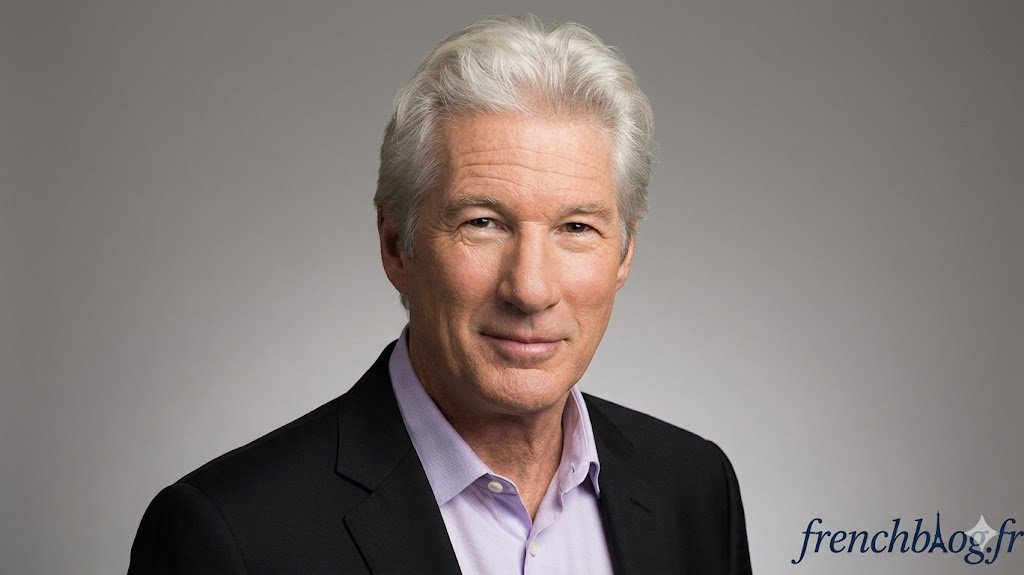
Richard Gere Early Life and Education
Richard Gere was born on August 31, 1949, in Philadelphia, Pennsylvania, into a large Methodist family. From a young age, he showed an interest in both athletics and the arts. Gere excelled in gymnastics and developed a disciplined approach to physical performance, skills that would later contribute to his commanding screen presence. He attended the University of Massachusetts Amherst on a gymnastics scholarship, where he also became involved in theater. Although he left college before completing his degree, the experience gave him a foundation in acting that would guide his early career. Gere’s upbringing in a modest household, combined with his exposure to performance and education, shaped both his work ethic and his empathetic worldview.
Richard Gere Stage Career and Early Acting
Before breaking into film, Gere honed his craft on the stage. He performed in productions such as Rosencrantz and Guildenstern Are Dead and appeared in the Broadway rock opera Soon. His work in theater taught him the importance of timing, physicality, and audience connection. In 1973, he appeared in the London production of Grease, further refining his ability to portray charismatic and compelling characters. These formative experiences provided him with both confidence and versatility, allowing him to transition smoothly from stage to screen and take on a wide variety of roles in Hollywood.
Richard Gere Breakthrough in Hollywood
Richard Gere’s rise to fame began in the late 1970s. He earned early recognition with roles in films such as Looking for Mr. Goodbar (1977) and Terrence Malick’s Days of Heaven (1978), where his nuanced performances displayed his natural screen presence. However, it was his portrayal of a sophisticated, stylish escort in Paul Schrader’s American Gigolo (1980) that cemented his status as a Hollywood leading man and sex symbol. Gere combined charm, elegance, and subtle vulnerability in the role, capturing audiences’ attention and opening the door to more prominent film opportunities. His breakthrough continued with An Officer and a Gentleman (1982), where he played Zack Mayo, a Navy officer trainee navigating personal and professional challenges. This role showcased his ability to portray both emotional depth and romantic appeal, establishing him as a bankable star.
Richard Gere Romantic and Iconic Roles
The 1990s were a defining era for Gere, highlighted by his performance in Pretty Woman (1990) opposite Julia Roberts. His portrayal of Edward Lewis, a wealthy businessman who falls in love with a spirited woman from a different social background, became iconic. The film’s success propelled Gere to global recognition and cemented his reputation as a charismatic leading man. Beyond romantic roles, Gere demonstrated his dramatic range in films such as Primal Fear (1996), where he portrayed a defense attorney navigating complex moral terrain, and Runaway Bride (1999), which reunited him with Roberts for another commercially successful romantic comedy. Gere’s performances in this period balanced charm with emotional depth, establishing him as one of Hollywood’s most versatile actors.
Dramatic Roles and Career Diversification
As his career progressed, Gere sought roles that challenged him beyond the romantic genre. His performance in Chicago (2002) as the slick lawyer Billy Flynn earned him a Golden Globe Award and highlighted his ability to blend acting with musical performance. Films such as Unfaithful (2002) and Arbitrage (2012) allowed Gere to explore complex characters facing moral dilemmas and personal crises. He also appeared in Shall We Dance? (2004), demonstrating his skill at combining subtle comedic timing with dramatic tension. Throughout these years, Gere continued to prove that he was not limited to one type of role, expanding his reputation as a skilled and adaptable actor capable of tackling diverse genres.
Recent Work and Continued Relevance
In recent years, Gere has remained active in film and television. He has taken on roles that showcase maturity, sophistication, and emotional nuance, including collaborations with directors from earlier in his career and participation in international projects. His performances demonstrate the same charisma and depth that first drew audiences decades ago, proving his enduring appeal in a competitive industry. Gere continues to explore a balance between mainstream commercial projects and thought-provoking dramas, maintaining relevance and respect within Hollywood.
Richard Gere Humanitarian Efforts and Advocacy
Outside of acting, @Richard Gere is known for his humanitarian work, particularly his advocacy for Tibetan rights. A devoted Buddhist and close friend of the Dalai Lama, Gere co-founded Tibet House US and has been an active chairman of the International Campaign for Tibet. He has dedicated decades to raising awareness about human rights, cultural preservation, and religious freedom for the Tibetan people. Gere’s activism extends beyond Tibet, including support for HIV/AIDS awareness, refugee relief, and other global humanitarian causes. His public advocacy demonstrates a commitment to using his celebrity status to promote compassion, justice, and cultural understanding worldwide.
Richard Gere Personal Life
Gere’s personal life has often attracted public attention. He was married to supermodel Cindy Crawford from 1991 to 1995 and later to actress Carey Lowell, with whom he has a son, Homer James Jigme Gere, born in 2000. After divorcing Lowell in 2016, he married Spanish activist Alejandra Silva in 2018, and the couple has two children together. Gere currently splits his time between the United States and Spain, focusing on family life while remaining active in humanitarian efforts and the film industry. His personal experiences, including marriage, parenthood, and cultural engagement, have influenced both his on-screen work and his advocacy.
Richard Gere Awards and Recognition
Over his career, Gere has received numerous accolades recognizing both his acting achievements and cultural impact. These include a Golden Globe Award for his role in Chicago, the Goya Internacional Award in 2025 for lifetime cinematic contributions, the Donostia Award at the San Sebastián Film Festival in 2007, and the Golden Icon Award at the Zurich Film Festival. These honors reflect Gere’s enduring influence as both an artist and a public figure committed to meaningful social causes.
Richard Gere Cultural Legacy
Richard Gere legacy in Hollywood is significant. As a romantic leading man, he helped define the cinematic landscape of the 1980s and 1990s, captivating audiences with charm, elegance, and depth. As a dramatic actor, he has taken on morally complex and emotionally demanding roles, earning critical acclaim. Beyond film, Gere’s advocacy work has made him a globally recognized humanitarian. He represents a model of an actor who balances commercial success with personal integrity and social responsibility. Gere’s influence spans generations, inspiring both emerging actors and audiences worldwide.
Conclusion
Richard Gere’s life and career exemplify the blend of talent, charisma, and social consciousness that defines a lasting Hollywood legacy. From his early stage work to his iconic film roles and humanitarian advocacy, Gere has consistently demonstrated artistry, compassion, and commitment. His continued presence in film, combined with decades of meaningful activism, ensures that his influence will endure both on and off the screen, making him a true icon of contemporary cinema and global cultural engagement.









Leave a Reply