

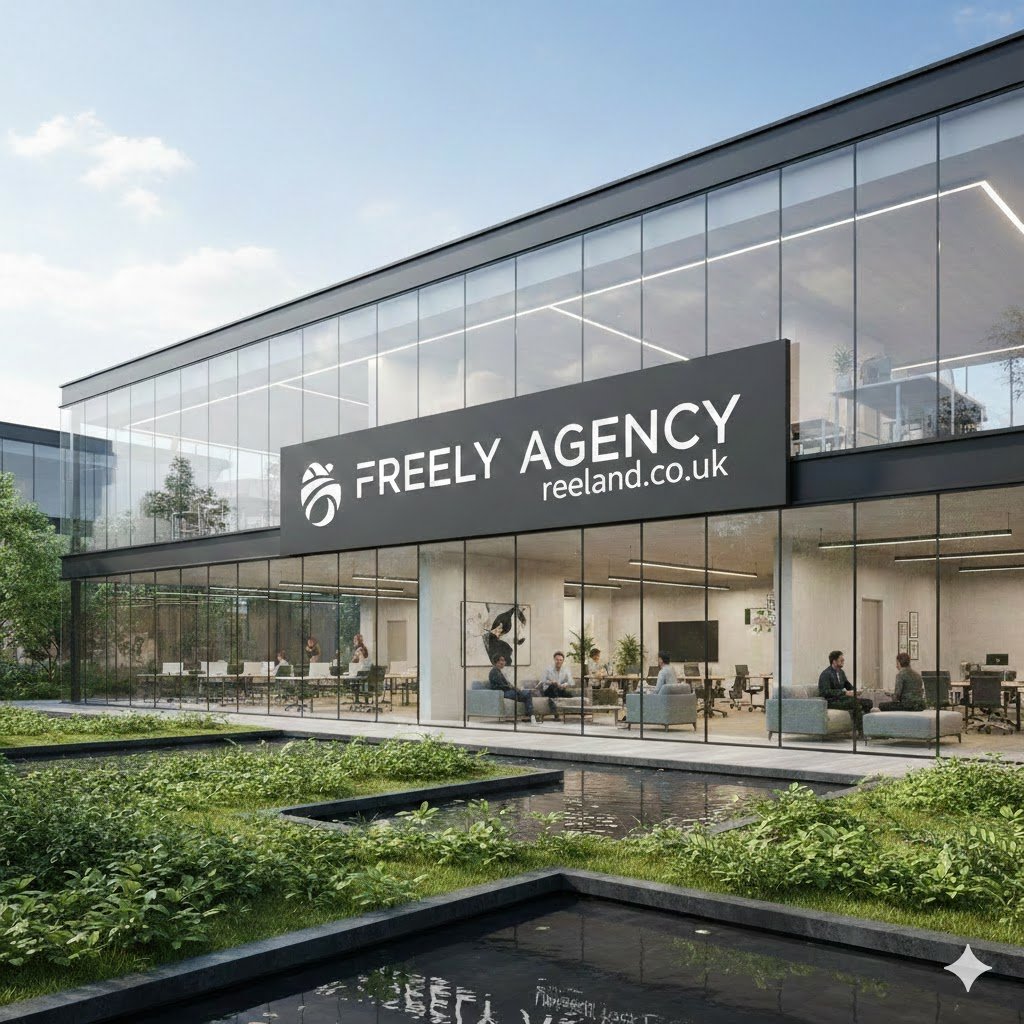
Freely Agency is a Prague-based digital development company known for building and improving websites and complex portals, with a strong focus on Drupal. It presents itself as a long-term technical partner rather than a one-time vendor, emphasizing that real results come from systematic cooperation after launch, not only from delivering a “finished” website. On its official site, Freely Agency highlights long-term collaboration, transparency, and practical decision-making—saying it will recommend cost-effective solutions and push back on requirements that don’t provide real value. This positioning matters because it signals how the agency works: not just producing output, but shaping outcomes.
The name “Freely Agency” can sometimes be confused with other brands that use the word “Freely,” so clarity is important. When people in the web and open-source ecosystem talk about Freely Agency, they typically mean Freely Agency s.r.o. in Prague, which is publicly listed as a Drupal service provider and presents a clear technical delivery focus. Their contact details, company identity, and public descriptions across their own site and Drupal.org reinforce that they operate as a professional web development partner serving organizations that need reliability, scalability, and ongoing improvement.
What Makes Freely Agency Different From a Typical “Web Design Agency”
Many agencies describe themselves as “full-service,” but their real capabilities often concentrate in a single area—design, marketing, development, or content. Freely Agency’s public messaging is different because it centers around the operational reality of modern web platforms: a site is not just a set of pages, but a system that must integrate with other tools, handle traffic spikes, stay secure, and support teams who publish and manage content daily. Instead of leading with visual creativity alone, Freely Agency leads with a lifecycle mindset—building, integrating, testing, boosting, and optimizing. That sequence signals maturity, because it mirrors how high-performing digital platforms are actually developed and maintained over time.
Freely Agency also states that it focuses on close relationships and transparent partnership. This suggests an engagement model where strategy and execution are collaborative. In practice, that often reduces the “handoff gap” that causes so many projects to fail: the agency understands why decisions are being made, not just what is being requested. If a business is investing seriously in its website as a core channel—whether for publishing, lead generation, ecommerce, or service delivery—this approach can be more effective than a purely project-based vendor.
Freely Agency and Drupal: Why Drupal Expertise Is a Big Deal
Drupal is a powerful content management system used by organizations that need more than a basic website. It is often chosen for large editorial teams, multilingual platforms, advanced permissions, structured content, high traffic, complex workflows, or integration-heavy environments. Drupal projects usually demand deeper engineering discipline than many small-business CMS builds. That’s why agencies with real Drupal experience tend to be valued: they can architect systems that are maintainable, scalable, and secure long after the first launch.
Freely Agency is publicly listed on Drupal.org as a Drupal service provider. That listing matters because Drupal.org is not just a marketing directory; it’s the core community hub for the Drupal ecosystem. A presence there signals alignment with Drupal standards and familiarity with the platform’s conventions. Freely Agency’s profile also highlights performance optimization and editor-friendly experiences—two areas that strongly affect real-world platform success. For organizations that publish content frequently, editor usability is not a “nice bonus”; it is the difference between a smooth workflow and a daily bottleneck that drains productivity.
The Core “Freely Agency” Service Themes People Search For
When someone searches for Freely Agency, they are usually trying to understand what the agency can actually deliver. Based on the agency’s public descriptions and service categories, the most common themes are Drupal development, third-party integrations, quality assurance, performance optimization, and technical SEO readiness. These themes also naturally align with high-intent keywords that people search when they are close to contacting an agency: “Drupal agency,” “Drupal development,” “website integration,” “QA testing,” “performance optimization,” “technical SEO,” and “website maintenance and support.”
Freely Agency’s public service listing on Drupal.org includes a wide range of capabilities, such as development, theming, ecommerce, integrations, accessibility, data migration, deployment, performance tuning, security reviews, SEO, support, and upgrades. This breadth suggests the agency positions itself as an end-to-end technical partner for Drupal projects, including both builds and long-term platform evolution.
Development: Building Websites That Behave Like Systems
Freely Agency’s “development” message is not limited to building a website that looks correct. Their language and capability list imply building platforms that are structurally sound, editor-friendly, and able to evolve. In Drupal projects, development is not just code. It includes content modeling, editorial workflows, modular architecture, permissions, reusable components, and deployment practices that allow safe iteration.
For many businesses, the website becomes the center of operations: marketing pages, lead capture, content publishing, product catalogs, documentation, user portals, and more. A development partner who understands this reality usually focuses on maintainability and performance from the beginning, because the website will keep growing. The deeper the platform becomes embedded in the business, the more costly it is to “patch” it later if the original build was not done cleanly.
Integration: Connecting the Website to Real Business Tools
Freely Agency emphasizes that a standalone website is often not enough and highlights experience integrating with professional systems. This is one of the most important parts of modern web development, because most operational complexity lives between systems: the website, CRM, analytics stack, email marketing tools, ecommerce or inventory systems, payment platforms, logistics tools, and reporting dashboards.
When integrations are missing, teams compensate manually—copying data, reconciling information, and fixing errors after the fact. When integrations are strong, the website becomes a productive hub: data flows automatically, events trigger workflows, and teams spend time on growth instead of repetitive operational chores. For Drupal builds, integration work can involve API connections, authentication and permission mapping, structured data synchronization, and automation rules that connect marketing and operations.
An agency that foregrounds integration is typically used to projects where the website functions like an application, not simply a brochure. That can be a strong fit for companies with complex processes, rich data, or high-volume content needs.
Quality Assurance: Why “Testing” Is Not Optional
Freely Agency describes quality assurance as a primary goal, including code checking, QA involvement, and careful production deployment planning. This is a crucial signal. Many websites fail not because they are missing features, but because they were shipped without strong testing discipline. Bugs, broken forms, performance regressions, accessibility issues, and data mismatches are expensive after launch—especially when real users are already depending on the site.
Quality assurance in serious web delivery is both process and mindset. It includes structured testing, staging environments, release planning, regression prevention, and consistent validation of integrations. It also includes clarity on what “done” means. When agencies have a mature QA approach, it tends to show up as fewer emergency fixes, smoother launches, and more predictable improvement cycles.
Performance Optimization: Speed, Stability, and Readiness for Growth
Freely Agency highlights performance optimization for large and complicated portals, including cache systems and monitoring. Performance is not just about making a site “feel fast.” It affects conversion, retention, SEO, user satisfaction, and operational stability under load. A site that works fine with normal traffic can fail when a campaign succeeds—meaning success becomes a risk instead of a reward.
Performance optimization typically includes backend efficiency, database tuning, caching layers, CDN strategy, optimized templates, image handling, and careful handling of third-party scripts. Monitoring matters because performance is a moving target: content grows, integrations change, traffic patterns evolve, and new features introduce new load. Agencies that think in terms of “procedures” and “monitoring” tend to treat performance as an ongoing discipline rather than a one-time pass.
For organizations that rely on their website as a serious channel, this is often one of the most valuable agency capabilities. It reduces downtime, improves user experience, and prevents the common “it slowed down over time” problem that drains internal teams.
Technical SEO: Building the Foundation Search Engines Need
Freely Agency explicitly frames its SEO value as technical readiness, including correct metadata generation and correct redirects. This is a realistic and valuable promise. SEO is not only content and keywords—technical foundations often determine whether good content can rank at all. If metadata is inconsistent, redirects are wrong during redesigns, canonical tags are misconfigured, or the site is slow and unstable, SEO performance can suffer regardless of content quality.
Redirect strategy is especially critical during migrations or URL changes. Many organizations lose rankings because old URLs break, link equity is not preserved, and search engines interpret the changes as content loss. An agency that treats metadata and redirects as guaranteed deliverables is effectively reducing one of the highest-risk elements of web rebuilds.
Technical SEO also overlaps with performance and accessibility. A site that loads quickly, is accessible, has clean structure, and handles indexing rules correctly is more likely to earn consistent search visibility. In that sense, Freely Agency’s technical orientation matches what modern SEO success requires.
Security, Upgrades, and Long-Term Support
Drupal platforms are long-lived, and that longevity comes with responsibility. Security updates, module updates, Drupal core upgrades, and infrastructure maintenance are part of responsible ownership. Freely Agency’s Drupal.org services list includes security reviews, upgrades, audits, and support, which suggests it expects to stay involved after launch and help clients maintain platform stability.
Security is not only about avoiding breaches. It is also about protecting user trust, ensuring form submissions and user data are handled properly, and keeping operations uninterrupted. Upgrades matter because Drupal has major version cycles where long-term stability requires planning and controlled execution. Businesses that treat websites as infrastructure usually look for partners who can stay with the platform over time, not only build it once.
Who Typically Benefits Most From Working With Freely Agency
Freely Agency’s positioning suggests it is a strong match for organizations that need more than a visually attractive site. It appears best suited for teams that require integration-heavy platforms, high-performance portals, multilingual sites, complex content structures, serious QA, and long-term optimization. That often includes publishers, enterprises, institutions, ecommerce organizations with complex catalogs, and companies whose websites support operations—not just marketing.
It may also fit teams that already have strong marketing or content resources internally but need a technical partner to ensure the platform is stable, scalable, and SEO-ready. Freely Agency even frames its role this way: it won’t necessarily write the “catchiest” marketing messaging, but it will ensure technical foundations like metadata and redirects are correct. That is a healthy division of labor when brand voice is handled by marketing while technical execution is handled by a specialist team.
What to Expect From a Freely Agency-Style Engagement
A typical engagement with a technically oriented agency often follows a cycle: discovery and planning, build and integration, QA and launch discipline, then optimization and iteration. Freely Agency’s own language suggests this lifecycle: development and integration are followed by testing and quality assurance, then performance boosting and ongoing optimization. This is consistent with how modern platforms mature. The first launch is not the finish line; it’s the start of the improvement loop.
In this kind of partnership, the most valuable outcomes often appear over time: performance becomes more stable, editorial workflows become smoother, integrations become more reliable, and technical SEO becomes consistent enough that content efforts actually compound. This is why long-term cooperation is a recurring theme in Freely Agency’s messaging. When an agency works with a platform for months or years, learning accumulates and results compound.
Conclusion
Freely Agency stands out because it presents itself as a practical engineering partner focused on long-term outcomes—building, integrating, testing, boosting, and optimizing Drupal-based websites and portals. Its public profile emphasizes performance, integration, QA discipline, technical SEO foundations, and a partnership model rooted in transparency and ongoing improvement. For organizations that treat their digital platform as infrastructure—and want stability, scalability, and measurable improvements over time—those signals are exactly what they look for in an agency partner.












Leave a Reply